The Field Just Changed: Seven Days of Whitetail Tactics After the Combine
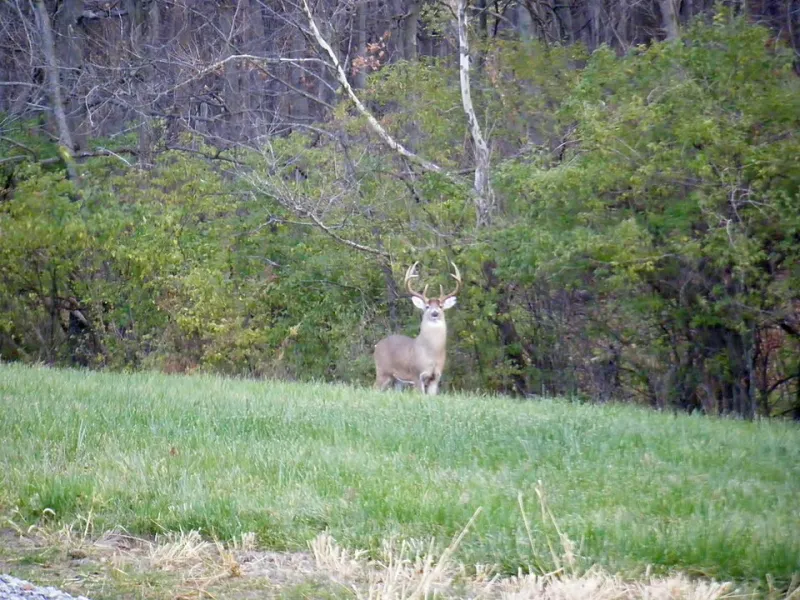
Photo: LouisvilleUSACE, CC BY 2.0, via Wikimedia Commons
One afternoon the corn is standing. The next, the combine has opened a hundred acres and the whole neighborhood feels different. Whitetails notice that change faster than most bowhunters do. In Corn Belt states like Iowa, Illinois, Nebraska, Kansas, and southern Minnesota, the week after harvest can be one of the best windows of the season—or one of the easiest to waste if you keep hunting the same old edges.
The trick is not to chase the new field. It is to read what the change did to bedding, food, and travel, then adjust without stomping through the cover and telling every mature buck in the section that you panicked.
The First 48 Hours: Read, Do Not Rush
When the field comes down, resist the urge to move a stand the same evening. The first two days are for reading sign from a distance. Glass the field edges, the remaining fence lines, and the brushy draws that suddenly look exposed. Look for doe groups using the new open ground, and pay attention to where they enter and exit.
Fresh tracks, droppings, and rubbed fence posts tell you more than a field full of deer at last light. You want to know where the deer are comfortable, not just where they showed up once. In the first forty-eight hours, bucks are often still using the same core cover they used before harvest. The difference is that their food source and escape routes just changed.
This is also the time to check your access. A road that was hidden by corn may now leave you sky-lined. A ditch that gave you cover may now be the shortest route from the truck to the stand. Spend the first two days fixing those problems in your head, not with a chainsaw and a four-wheeler.
Where Bucks Go When the Cover Hits the Ground
Harvest takes away the security blanket, but it does not make mature bucks stupid. They usually shift to the thickest remaining cover nearby: creek bottoms, brushy draws, cedar pockets, overgrown fence lines, and unharvested soybean or alfalfa fields. They also tend to move closer to the edges where cover and food meet, because that is where they can feed and still slip away.
Look for inside corners, where a standing crop meets a harvested field, and for narrow strips of cover between two open fields. Those are natural funnels after harvest. A mature buck may not show himself in the open until last light, but he will often stage just inside the first row of brush or in a shallow draw that lets him watch the field without being watched.
The key signal is not a giant track. It is consistency. If you find fresh droppings and browsing on the same field edge two evenings in a row, that is a pattern worth hunting. If you find one set of tracks and a lot of old sign, keep looking.
Relocating Stands Without Spooking the Neighborhood
Moving a stand after harvest is often necessary, but it is also the fastest way to blow your best setup. Do it midday, with a plan, and preferably when the wind is wrong for the deer you are after. Use the new open ground to your advantage: if the field is harvested, you may be able to approach from a direction that was impossible before.
Do not move a stand right onto the freshest edge you find. Pick a tree a little farther back, where you can watch the edge without sitting on top of it. The best post-harvest setups often sit ten to twenty yards inside the remaining cover, where you can cover the field edge and the travel route behind it. That gives you a chance to see a buck before he steps into the open and a chance to draw without a hundred eyes on you.
If you have multiple stands, resist the temptation to fill every new edge with one. Pick two or three options and keep the rest of the farm quiet. The more you move, the more scent you leave, and the more likely you are to push a buck into the neighbor’s timber.
Wind, Access, and the New Field Edge
The wind did not change, but the cover around it did. A setup that let you sneak in with a crosswind before harvest may now leave you exposed. Check your access route on a map and then on foot, and think about what the deer will see and smell.
Harvested fields also create new thermal and wind patterns. Open ground heats and cools faster than standing corn, and the edges can carry scent differently in the evening. If you are hunting a fresh edge, try to approach from the downwind side and use the remaining cover as a screen. If you cannot get in clean, save the stand for a better wind.
One of the most common mistakes is overhunting a new field edge because it looks perfect. Mature bucks are not fooled by a stand that gets hunted three evenings in a row. Pick your first sit carefully, then leave before you burn it out. Sometimes the best move is to glass from a distance, confirm the pattern, and wait for the right wind.
Hunting the Fresh Edge Without Burning Him Out
When you do hunt the new edge, keep it short and low-impact. Get in early, stay quiet, and do not call unless you have a reason. The first week after harvest is about observation as much as opportunity. If you see a mature buck using the edge, do not rush a marginal shot. Learn his entry and exit, then plan a better setup.
The best time to hunt may be the last hour of light, when deer feel safe stepping into the harvested field. But do not ignore mornings. Bucks often return to cover later in the morning after feeding, and a fresh edge can be a great place to catch one slipping back to bed. The key is to avoid pressuring the same edge from the same direction every time.
If you have a buck patterned, give him one or two clean sits with a good wind and then back off. Crop harvest is a big change, but it is not a free pass to hunt recklessly. The hunters who do well in this window are usually the ones who let the first week settle, read the new patterns, and then make one smart move instead of five desperate ones.
The Seven-Day Checklist
Day one and two: glass, read sign, and check access without disturbing cover. Day three and four: relocate one or two stands to inside corners or brushy transitions, with the wind in mind. Day five and six: hunt the best edge only when the wind is right, and keep the sits short. Day seven: evaluate what you saw, back off if the buck is pressuring the edge, and save the setup for the next clean opportunity.
The corn coming down is not a disaster for bowhunters. It is a reset. Read the new field, respect the new cover, and hunt the fresh edge like the buck has already seen a truck, a combine, and one too many careless bowhunters. That is how you turn harvest week into an advantage instead of a lesson.