When the Pin Hovers: Reading a Whitetail in the Final Seconds
Photo: bowhunter at full draw aiming at whitetail deer in wooded habitat, via thumbs.dreamstime.com
There is a stretch in every close bowhunt when the rangefinder goes down, the release clips on, and the whole hunt narrows to a pin and a patch of hide. That is the moment when a lot of us stop looking at the deer as an animal and start looking at it as a target. Bad idea. A whitetail is giving you a read the entire time—head, ears, eyes, tail, legs, neck, attitude. The trick is learning what to do with that information while your bow is already at full draw.
This is not about overthinking a 20-yard chip shot. It is about recognizing the difference between a deer that is calm, a deer that is getting suspicious, and a deer that is one small sound away from blowing out of the county. In this 2026 season, with pressured public-land deer and late-season whitetails that have seen every trick in the book, that read can be the difference between a clean tag and a long walk back to the truck.
Start With the Head and Ears
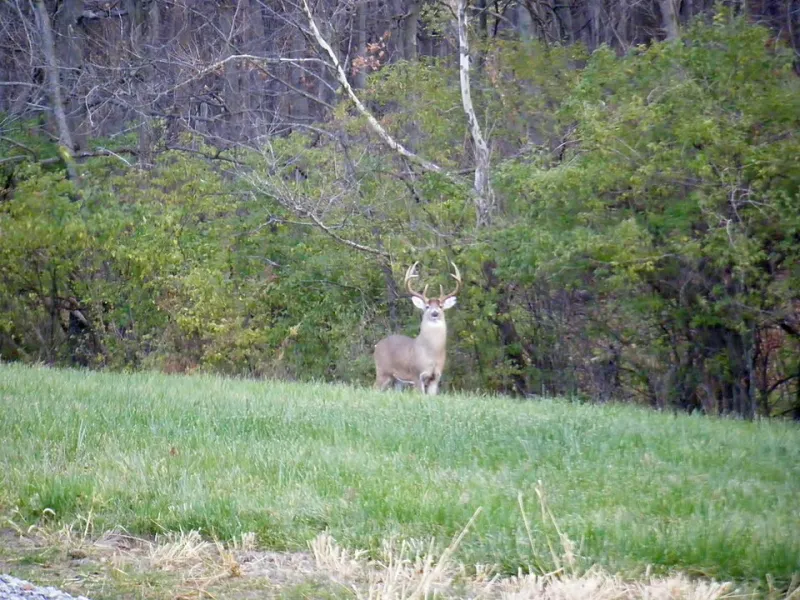
A feeding deer usually has its head down, nose in the leaves, weight shifting in a lazy way. The ears rotate independently, swatting at flies and picking up sound without locking onto anything. That is a relaxed whitetail. If you have a clear shot and your pin is settled, this is the deer you can kill.
The head comes up and things change. A deer that lifts its head to check a noise is not automatically spooked, but it is now gathering information. Watch the ears. If they are swiveling and soft, the deer is curious but not committed to leaving. If both ears lock forward and the eyes bore a hole through the brush in your direction, the animal has a question. If the ears pin back against the neck, you are past curiosity. That deer is uneasy, and it is probably looking for a reason to move.
Eyes matter too. A deer looking away or feeding is one thing. A deer staring up into your tree, behind your stand, or at the exact patch of cover where you are hiding is another. You cannot out-stare a whitetail. If it is drilling your position and you are at full draw, start thinking about letting down.
The Body Tells on Itself
Look past the head and check the whole frame. A calm deer stands loose. The neck is relaxed, the shoulder is not bunched, and the tail hangs or swishes in a normal, easy rhythm. A suspicious deer gets tight. The neck straightens, the legs look ready, and the tail may go stiff and stick out behind the animal instead of hanging down. That stiff tail is not a friendly sign.
Pay attention to the feet. A deer that stomps, shifts its weight repeatedly, or keeps one front leg cocked is trying to make something move. It is also coiling up. A deer that crouches slightly, drops its rear end, or gathers its legs under its body is preparing to leave. At that point, the window is closing fast.
The shoulder is another tell. On a relaxed broadside deer, the shoulder looks soft and the deer seems almost sloppy in its posture. On an alert deer, the shoulder muscles bunch and the animal looks like a sprinter in the blocks. That is not the time to force a marginal shot just because the pin crossed the vitals for half a second.
Three Field Scenarios
The calm deer: settle the pin
This is the straightforward one. The deer is feeding, quartering slightly away, head down, ears relaxed. You have ranged it, the pin is steady, and the animal is not focused on you. Settle the pin behind the shoulder and execute. Do not rush because you are afraid the deer will move. Do not add a bunch of extra movement by second-guessing the range. Calm deer give you the cleanest opportunity you are going to get. Take it with a smooth release and follow through.
The suspicious deer: adjust the aim point and wait
A suspicious deer is not a lost cause, but it is a different shot. If the deer is alert but still broadside or slightly quartering away, I want to aim a little lower than normal—toward the lower heart area—because an alert whitetail is more likely to drop or bolt at the sound of the shot. That does not mean aiming at the leg. It means picking a spot that accounts for string jump and gives you a little margin if the deer loads up.
If the deer is quartering, the aim point changes with the angle. Do not force a broadside pin behind the shoulder on a hard quartering animal. Follow the exit. On a quartering-away deer, aim to send the arrow out the opposite shoulder. On a quartering-to deer, you need to be much more careful, and honestly, most of the time I would rather wait for a better angle than try to thread one through the near shoulder at full draw.
The deer about to bolt: let down
This is the read that saves arrows and saves deer. If the ears are pinned, the body is coiled, the tail is stiff, and the deer is staring through you, let down. It stings in the moment—especially after a long sit or a cold morning—but a rushed shot at a jumpy deer is how good hunts turn into bad tracking jobs. Letting down gives you a chance to regroup, and sometimes the deer settles back into feeding after a few minutes. Forcing the shot usually ends with a white flag and an unfilled tag.
The Aim Point Is a Conversation, Not a Command
The pin does not live in a vacuum. The deer's body language should shape where you put it. A relaxed deer gets the standard behind-the-shoulder aim point. An alert deer gets a lower hold and a tighter focus on the exit. A deer that is already leaving gets no arrow at all. That is the hierarchy I use, and it has kept me from taking some shots I would have regretted.
One more thing: do not confuse movement with opportunity. A deer that is walking through your shooting lane is not necessarily a deer you should shoot. If it is moving steadily and not stopping, a mouth bleat or a soft grunt can freeze it for a second, but you have to be ready the instant it stops. If it stops with its head up and ears forward, you are back to reading the room. If it stops calm and broadside, take the shot. If it stops wound tight and staring, wait or let down.
What I Do at Full Draw
When I am at full draw, I try to keep my eyes working even while my pin is settling. I check the head, then the ears, then the tail, then the shoulder. It takes less time than it sounds like. If the deer is calm, I stop analyzing and start executing. If it is suspicious, I make a quick decision about the aim point and whether the angle is still good. If it is blowing up, I let down and eat the tag for that sit.
The best bowhunters I know are not the ones who force the most shots. They are the ones who read the animal well enough to know which shots are worth taking. At full draw, the deer is talking. Your job is to listen before you release.